
In fond memory of Yuritzi – “For we wrestle not against flesh and blood, but against principalities, against powers, against the rulers of the darkness of this world, against spiritual wickedness in high places. Wherefore take unto you the whole armor of God, that ye may be able to withstand in the evil day, and having done all, to stand.” Eph 6:12-13.
_________
After watching a government squad beating and abducting a teenager so they might conveniently torture him to death, seeing the police kidnap a couple of children to rape and (most likely) kill, and hearing all about the fine local officials brutally destroying as many lives as possible, I think losing faith in humanity was a sensible thing for me to do.
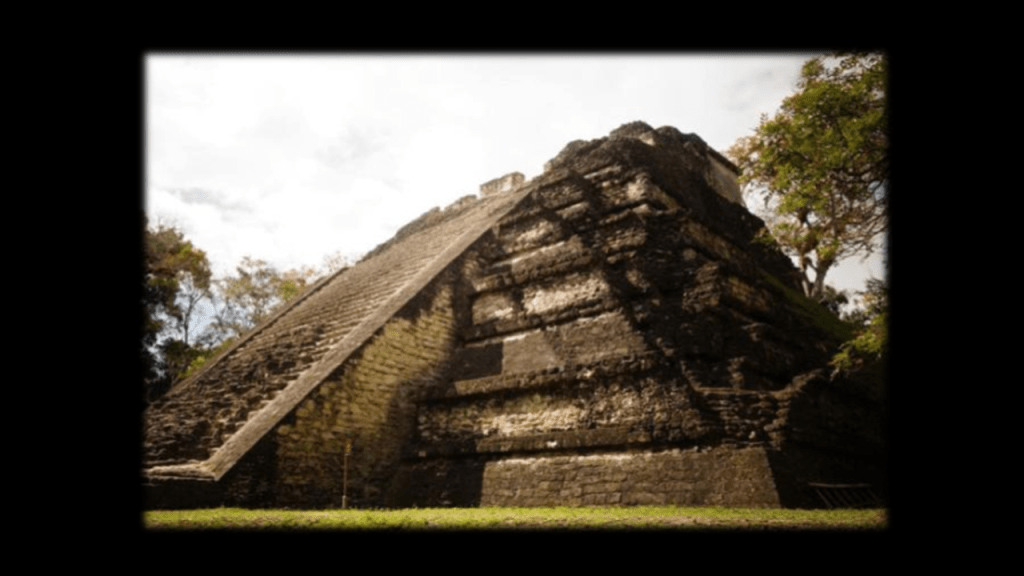
We drove toward Mexico but only made it some of the way there. The drive was unique in that none of us said one word. After seeing Guatemala City, talking was out of the question. We ended up in a Mayan village on a mountain—got a lotta mountains in Guatemala. I thought you should know that.
Folks in the village spoke in a Mayan language called K’iche. Sara and Luke were friends with a villager named Yuritzi, who spoke some English. Yuritzi and I hit it off, which was good because Sara and Luke wandered off to a small hut so that they might put a little fun back into their hopelessly dysfunctional relationship.
After I dropped off the last of the coloring books and medical supplies from the jeep, Yuritzi gave me a walking tour of the village. If you’re going to walk through a Guatemalan village in the Highlands, then leave your business attire at home, as the roads are paved with mud. The houses consisted of adobe and wood. They were held together with mud. There were three-foot-high walls on both sides of the road. The stones that comprised the wall were retained with, of course, mud.
In the middle of the village, we came across a general store. Yuritzi told me the store was open all day, every day. The only store employee was the guy who owned the place. He worked in the store from early morning to early evening. If it was midnight and you wanted a drink, you could pick up your drink from the store, go to the owner’s house (across the street), and give the money to the owner or whatever family member was there. Nothing stopped people from walking into the store in the middle of the night, taking whatever they wanted, and walking off without paying for it.
I asked Yuritzi if the honor system worked out for the store owner.
Her response was, “What it is honor system?”
“Well, he [the store owner] depends on people being honest and not stealing anything. That’s the honor system.”
She needed clarification. “What it is the other system?”
“Uh, he could lock the store when he wasn’t there, so no one would take anything without paying for it.”
I can’t adequately describe Yuritzi’s facial expression in relation to that statement. It, the facial expression, implied, “That may be the stupidest thing I’ve heard in my entire life. You’re an idiot. Do you think a person would steal something? Is that something YOU AMERICANS do? We ought to build a wall. I feel dirty just talking to you. You’re gross.”
The thought of stealing something from the guy’s store never occurred to her. Or, I guess, anyone else in the village. The store had been there for thirty years, and no one ever stole anything from it.
I was amazed, especially considering the extreme poverty. “Okay, that’s high-octane honesty for you.”
Yuritzi looked at me suspiciously. “So, um, Drool, it is no honor in America system?”
“No.”
“Why?”
“That’s a fine question. I have no fine answer. Oh, it’s Drew, Not Drool.’ Future reference.”
“Trune?”
“Drew.”
“Cruel?”
“We’ll stick with Drool. Close enough.”
Yuritzi persisted. “So much in America. Everyone is with money. Is stealing. Why, Drool?”
Now, this was 1979. The US economy was in trouble. Unemployment was the highest since the Great Depression, and the inflation rate was approaching 20%. Times were tough. I wanted to tell her that life in America isn’t always easy.
On the other hand, she lived in a mud village. There was no indoor plumbing and no electricity. All the children were malnourished. An average wage earner made under $250 per year. And their country’s government had declared war on them.
So, I didn’t mention anything about it.
Instead, I said, “Most Americans do the honor system. It’s just that a few don’t. Most of the people are okay. Large companies and our government are not.”
“I sad for them.”
Yuritzi and I continued walking. I must have met everyone in the village. Not only were they all honest, but they were also very friendly. Everyone we met invited me to dinner. The folks were eager to share what little they had with me. The astonishing decency of these villagers made me feel exceptionally indecent. All this integrity was making me feel like a miserable, fornicating little bag of puke.
It was easy to see that the villagers revered Yuritzi and considered a leader among everyone we met. She couldn’t have been more than twenty, but men twice her age asked her for advice and guidance. She was fluent in various Mayan dialects and Spanish. I told her that I could attempt speaking in Spanish. Yuritzi said she had just started learning English and was keen to practice with me, so we mostly spoke English.
I asked her, “Do you know, in English, what you call someone who speaks two languages?”
“No.”
“Bilingual. What do you call someone who only speaks one language?”
“What?”
“American.”
Yuritzi didn’t get it. I explained it to her. She still didn’t get it. She wanted to get it. I wanted her to get it. I tried to get her to get it by explaining it again. Finally, we gave up and wrote it off due to cultural differences.
Regarding culture, the US is from Venus, and Mayan Guatemala is from Mars.
Yuritzi decided to explain something simple in the Mayan world: religion. It’s not the topic with which I would’ve opened. “So, what it is politeísmo for English?”
“Polytheistic? Polytheism. Something like that. Many gods, no waiting?”
“Is that Drool. We do worship to gods and goddesses. More than one.” They had a boatload of them. Only a few made the A-list. “We make, festival, uh, celebraciones?”
“Celebration?”
“We make the worship to celebration to gods. And sacrifice. Yes, yes. Important in Maya faith to doing this. In America, it is only one God?”
“Well, we haven’t agreed on that. We’re not very mature when it comes to agreeing on religious matters. People from all over the world live in the US. I think most have one god. Some have lots, and some have none. That’s a guess.”
“What gods with you, Drool?”
“None that I can account for.”
I was rewarded with a nose twitch and a concerned reply, “Everyone needs gods in life. I want you to find gods for you. Worship gods to make you have strong faiths. There no belief without faiths.”
Yuritzi gave me a long, severe stare and said bluntly, “Drool, you are my other me.”
Digesting that statement took more than a few seconds. I wasn’t sure if she was imparting cultural information, accusing me of something, or if the drugs had kicked in. I attempted to clarify. I decided to give it a shot in Spanish. “Su otro eres. Ello triste. Debo negarme a estar bajo revisión.”
What I meant to say was, “Your other you? I’m sorry. I don’t understand.”
What I actually said was, “Your other are you. It sorrowful. I must refuse to stand under review.”
She smiled. “Is okay. Maybe we better with English. This makes an important filosofía with Mayan persons. You must understand this. We belief if I do good to you, I do good with me. Drool is you and me. Yuritzi is me and you. You am nice with me; you nice on you.”
“If we’re honest with each other, we are also honest with ourselves. Yes?”
Yuritzi, whose demeanor had been subdued and relaxed, shook her head in energetic agreement and seized the moment to jump on her soap box. She turned into a Pentecostal preacher at an uncomfortably fast pace. “Yes, yes. Is honest. It must always is with Mayan persons. Honest, yes, yes. Loyal on family on Mayan cultura always. Faiths. All the time belief on family, friends, village, family. Drool, this makes honor for us. Honor is our way. We wish to be with honor and faiths. We must leaves strong spirit once we dies. Life and no honor and faiths is means dead soul. Better to die with honor and true faiths and give good spirits on others to strength on them. Yes, yes.” And, after a pause, “It is this way with America persons, Drool?”
My answer was swift and adamant. “No.” After an awkward pause, “We pursue, uh, dinero, perseguir, money.”
I got another priceless look from Yuritzi that said, “What the hell is wrong with YOU AMERICANS? Do you people waddle around all day looking for cash?”
I attempted to explain the concept of the American Dream to Yuritzi. Her response was, “Okay, good. Yes, yes. This is fine doing this. Good.” It was her very kind way of saying, “What a crock of shit.”
We stopped at Yuritzi’s house, where I met her family. They were, of course, charming. She spoke with her father in K’iche for quite a while. It sounded like an interrogation with Yuritzi under the bright light.
We sat outside her house. This way, dear old dad could keep an eye on me.
Yuritzi barged ahead. “Where it is your faiths in?”
“My faith? Lost it in a custody dispute. I got the record collection. She got the faith.”
Her reply was a blank stare.
“Yuritzi, I don’t know. I’m sure I have faith in someone or something. At this moment, I can’t think of who that someone is or what that something is.”
“Persons is all born with faiths. They…uh, what is invertir in English?”
“Invest? Buy, maybe.”
“Yes, yes. Persons is born with faiths. Persons invest this faiths different. Drool, I want you invertir your faiths careful. Yes, yes. Don’t put faiths in bad things.”
Sound advice.
I responded, “Now, you. Yuritzi. You have faith in honor, family, Mayan culture, an eternal spirit…”
“In Itzamna.”
“Do what?
“Itzamna!”
“Gesundheit.”
“What it is buzz-dune-hate?”
“It’s what some folks say after a person sneezes. What is Its-manna”
“Itzamna!!”
Yuritzi said Itzamna was the creation god in the Mayan world. It sounded like Itzamna was the CEO of the Mayan gods or, at least, the one who had the checkbook. I’m unsure if the “under gods” did anything or if they sat around like regional VPs in corporations. Yuritzi rattled off the names and characteristics of quite a few gods.
I remember her saying one god oversaw suicides and was notable because he cut his head off. There was one who had only one leg. I don’t remember what he managed. It’s something other than the track team. One god managed corn, a full-time gig in Guatemala. One god wrestled crocodiles in his spare time. Others included one who burped a lot, one who made all the business deals, and one who had problems with excessive flatulence.
They are an eclectic bunch.
In the Mayan world, everyone and everything has a soul. Inanimate objects have a soul. A rock is a real soul brother. Your dishwasher has a soul. The dishwasher I have doesn’t. It has no soul. It’s soulless. And repulsive. It’s a vile, soulless piece of snail dung. Any dishwasher that makes your dishes dirtier has no soul. It wouldn’t surprise me if mine had committed multiple felonies.
There’s a heaven in the Mayan religion. It’s not celestial; it’s closer to an apartment building comprising thirteen floors. Each level had a specific god assigned to it. Those gods oversaw the check-in process and took care of any maintenance issues. That was another guess. I wasn’t clear if the people on the thirteenth floor were the crème de la crème. Maybe they had an express elevator.
There’s an underworld, also. It consisted of nine levels, with gods assigned at each level. I was unsure if they were the same nine levels of hell in Dante’s Inferno. I tended to doubt it. As I understood from Yuritzi, the Mayan underworld wasn’t a fiery furnace. Closer to standing in a very long line at the Department of Motor Vehicles, where the climate control was crappy, and if you had to go to the bathroom, then you’d lose your place in line. On the plus side, assuming you could hold it in, you could move up one floor at a time.
So, that was good.
There was a tree of life. It came in handy when the souls of the dead wanted to move up one floor. The tree was notable as a daughter of one of the underworld gods approached it, got pregnant, rose from the underworld, and gave birth to twins who didn’t have to stand in line at the DMV.
I don’t know who the father was. I didn’t ask.
So, that was the Mayan religion. The next topic was the Mayan calendar. If you thought the Mayan religion had too many moving parts, you haven’t seen anything yet. Their calendar is entirely out of control. Understanding it, in the best of circumstances, is beyond difficult. You’re in deep trouble when the person explaining the calendar doesn’t speak your language well.
Firstly, it’s not a single calendar. It’s three independent calendars, running in unique cycles, shoved together.
Yuritzi described one calendar as being 365 days long. So far, so good. However, instead of twelve months, they had eighteen months, each consisting of twenty days, which was a problem because that only accounts for 360 days. Yuritzi understood that. She said there was a nineteen month that consisted of five days. In the Mayan world, those five days are frowned upon. She said they had eighteen months named after gods (I think) and an additional month called something like “The Five Days that Suck.”
Now, the year runs closer to 365.25 days, of course. I asked Yuritzi how they reconciled the discrepancy. Was every fourth year a leap year when there was a month called “The Six Days that Suck?” At some point, you’d have to reconcile the difference, yes?
No. Per Yuritzi, it’s 365.00 days. Period. That’s it—end of conversation.
So, we were already off to a bad start. Then, another calendar that ran a little over 7,885 years was added to the mix.
She said only thirteen of the twenty days were numbered. That made things more fun. Each month had duplicate numbered days. The numbers ran in different sequences. Hell, I don’t know.
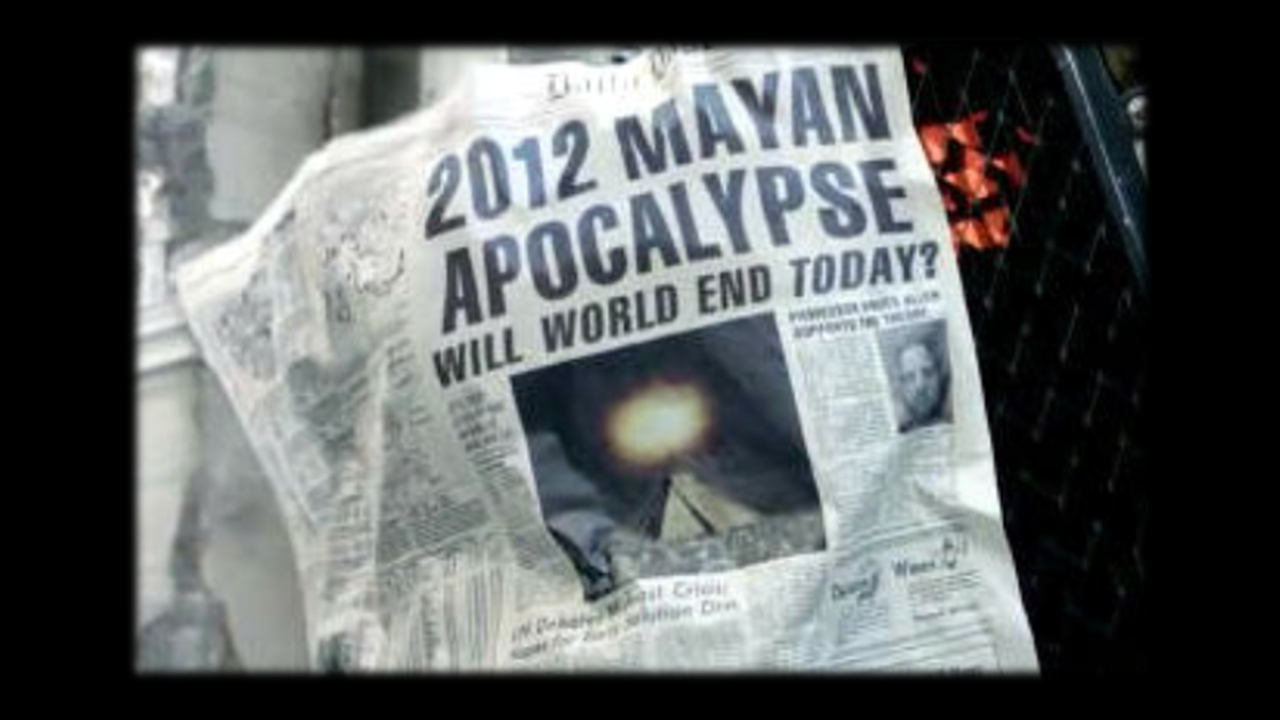
She advised me that the calendar would end in 2012. Since this conversation took place in 1979, I had thirty-three years to figure out how their calendar worked.
I had one obvious question for Yuritzi when she finished her calendar explanation. It troubled me. I needed her honest answer. “Where do you go to pee?”
Yuritzi pointed to a small, unlovely building. El baño was an exercise in simplicity. The toilet was a hole in the wooden floor. The hole was, I’m guessing, twenty inches in diameter. I didn’t stop to measure. A foot-high funnel widened the target area closer to thirty inches in diameter. If you stood over the hole to do number one, you had to go out of your way to miss. A lot of people missed the mark. The floor was soaked with something other than cologne.
If you’re standing (or squatting) over this large hole and miss the mark by three feet, you should return to basic training and work on your fundamentals.
The smell in el baño defied description.
You may have the same question I had regarding the destiny of one’s output in the potty room. I asked Yuritzi, “So, where do all the doo-doo go to?”
It was straightforward. A tunnel under the potty went down to a stream, transporting everything to a lake. I can’t imagine anyone consulted the fish during the planning phase. (I don’t know what reinforced the tunnel. Mud’s involved. I didn’t ask.)
Note to self – Don’t order any seafood.
I asked Yuritzi about her life history. She was vague and not comfortable discussing it. She said she left the village for a few years and made a comparatively good living using her sizable wit and ingenuity, sending the net profit to her family. She sidestepped the details but repeatedly stated her source of income was legitimate. I told her I never thought otherwise.
She had the opportunity to relocate to the States, which would have meant a much more comfortable and less stressful reality. And plumbing. An existence where you could, on a whim, flush. More importantly, she could have lived in a country without the government declaring war against her.
I wouldn’t have thought twice about leaving the country. Yuritzi didn’t think twice about going back to her village.
One more important question came to mind. I asked, “Why?”
Yuritzi repaid me with another memorable facial expression.
I followed up. “In this village, you struggle to get through each day. You had the chance to make a new life. Why come back?”
Her explanation was extensive and detailed. I’ll try to give it justice, although I may have misunderstood the finer points:
First, Yuritzi understood that returning to the village meant a reduced life expectancy. If the disease doesn’t get you, then the government will. She tried to sound pragmatic on this point. Based on their current MO, the government-funded death squads would be paying her village a visit where, if their glorious history was any indication, they, the death squads, would destroy her home and the people in it.
Second, she had promises to keep. To whom? God. Or the gods. I wasn’t clear. I asked what she promised. Her explanation flew over my head. Those promises, whatever they were, required her to return to her village and stay there. These were spiritual commitments, and she was intent on keeping them. Duty, to Yuritzi, had a higher calling. It came with a hefty cost that she seemed almost eager to pay. Besides, breaking promises would be something she could not live with.
Also, she had her immortal soul to consider. Life on Earth was a short-term gig. There wasn’t much mystery to it. One’s soul was another story. Souls were complicated and required a lot of attention to develop. Her soul needed her to be with her family and with the village. Leaving them could irreparably damage her soul and, therefore, was not an acceptable option.
Immortal soul aside, loyalty to her family was well ahead of longevity on her priorities list.
Additionally, if she were to relocate, it would never be to America. She told me America financed the dictatorship that was destroying her people and heritage. To her way of thinking, Uncle Sam was primarily responsible for the Mayans’ pain and suffering. An American corporation, the United Fruit Company (with full support from the US government), had reduced Guatemala to a nation of enslaved people. For Yuritzi, living in America would be an act of treason, an insult to her family.
Mayans, to their never-ending credit, don’t use any feeble, disingenuous, politically correct speech. They will tell you the truth. If it hurts, then it hurts.
While Yuritzi was blunt, she was never aggressive or antagonistic when she explained her feelings about the US. It was just the opposite. She sounded embarrassed and ashamed to admit her negative view of America. She apologized for her frankness.
“Yuritzi, I’m not sure you’re the one who should be saying sorry.”
Around this time, I started to learn an essential skill critical for all Americans who travel outside the States and something we Americans from the good old USA of America need to develop. Knowing it should be a required course before graduating high school. The name of the class is “How to Adequately Apologize Your Government’s Bad Behavior.”
Had I known, at the time, the extent of the damage the US Government had done to Guatemala, I would’ve put myself under arrest, tried myself, thrown myself on the mercy of myself, and sentenced myself to thirty years in the electric chair.
On accounta, it ain’t good. If you think we’ve done horrible things to people in our country, and we have, then you don’t want to know what we got up to in Guatemala.
“Yuritzi, you have been very nice to me. Everyone here has been so kind. I’m sure that’s the case with Sara and Luke, too. I don’t think I’d be friendly to Americans. I mean, it’s our tax dollars that are financing all this misery. But you….everyone….so nice.”
“It is our way.”
Those words have remained front and center in my mind.
Yuritzi asked, “It is with American know what is happen in Guatemala?”
“No. I doubt anyone knows. I had no idea until I got here. Most Americans don’t even know where Guatemala is.”
She smiled. My answer wasn’t much of a surprise.
We strolled to the hut where Luke and Sara had set up shop for the night. They were asleep.
Yuritzi and I faced each other. We didn’t speak for a minute. I wondered what being her was like. She saw the world and her place in it with such clarity. She was humble; however, she understood her importance to those around her. What drove her? What experiences shaped her? What did it take for her to be the person in front of me? I had plenty of questions. Sadly, for me, Yuritzi had matters requiring her immediate attention.
I knew we would never see each other again.
I thanked her for her time, kindness, and generosity.
She said, “You to remember me. In your soul, Drool. Always to remember importance things.”
“Yuritzi, I hope I never forget you and everything you said.”
“I am remember you. In my heart. All time.”
I stood still and watched as she drifted away into the morning fog. I felt like a child who accidentally lost grip of his balloon and helplessly watched it float away. I thought, “I’m going to miss you.”
When she disappeared from my view, the sun peaked over the horizon.
In late 1981, her village was annihilated as part of the US-supported “Silent Genocide” in Guatemala. Yuritzi was murdered.
Her soul, her immortal soul, was, and is, stubborn. It casts a very long light and shines as brightly as ever. My evening with Yuritzi took place almost half a century ago. For me, her spirit doesn’t endure. It doesn’t remain. It grows.
And it grows.
I know that on that horrifying day, Yuritzi stared in the face of evil and did not back down one inch.
I see her standing up to the armed lunatics, the ones about to kill everyone in sight. She had the faith to stand her ground.
It was her duty.
It was her way.
—END OF CHAPTER NINE—



 BOOMER(S) GONE WILD!
Leave a comment